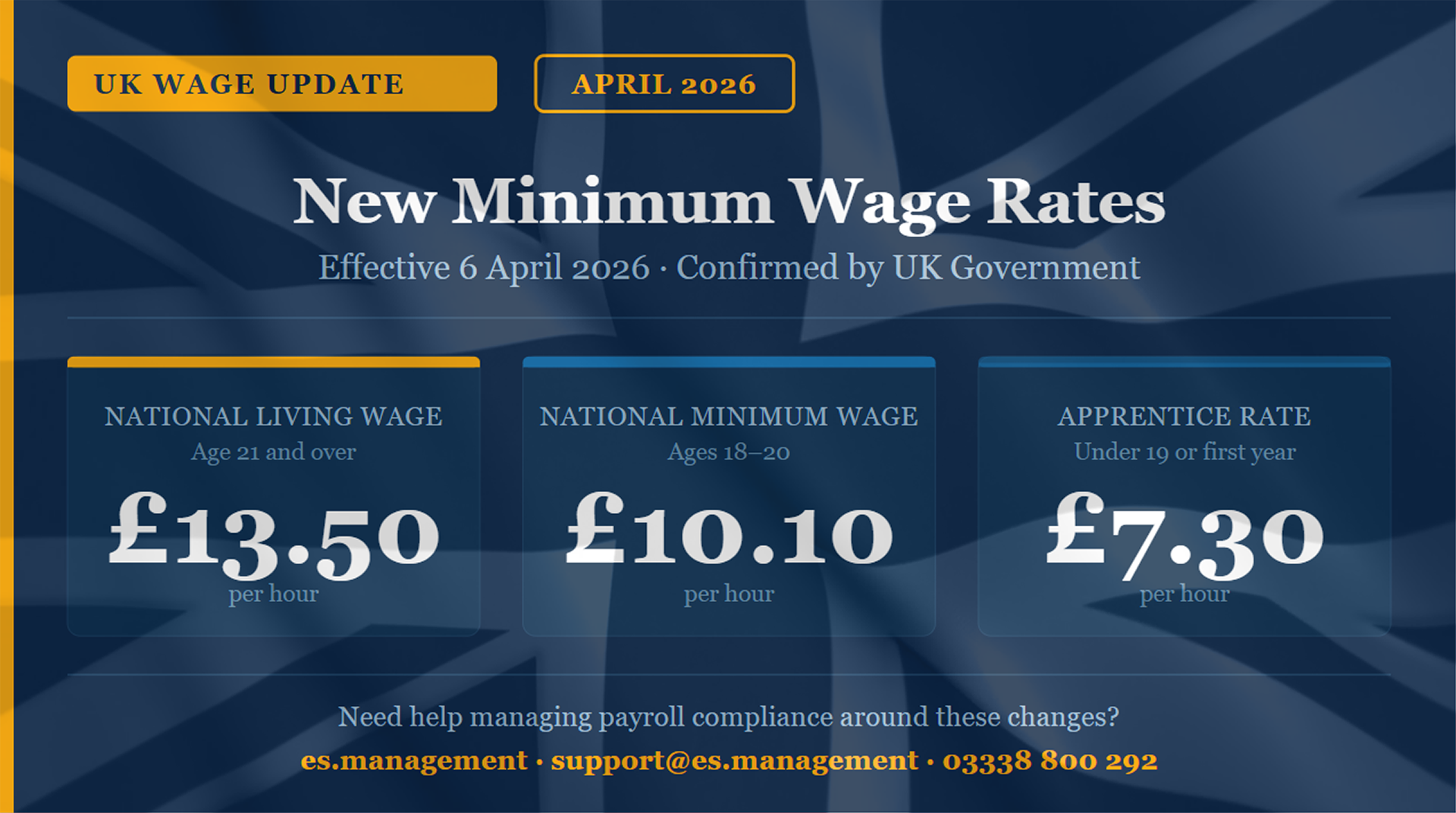
The National Minimum Wage and National Living Wage are not just annual rate changes. They are practical payroll compliance risks that need to be checked carefully across every pay run, especially where businesses use variable hours, agency labour, temporary workers, apprentices, umbrella payroll or shift-based assignments.From 1 April 2026, the National Living Wage for workers aged 21 and over is £12.71 per hour. The 18 to 20 rate is £10.85, the under-18 rate is £8.00, and the apprentice rate is also £8.00. GOV.UK confirms that minimum wage rates change on 1 April each year.
For payroll teams, the obvious first step is to update the rates. But that alone is not enough.
Many minimum wage issues arise because the headline hourly rate looks correct, while other parts of the arrangement pull the worker below the legal minimum. This can happen where unpaid working time is missed, deductions are not treated correctly, uniform or equipment costs are handled badly, travel or waiting time is misunderstood, or workers are put into the wrong age or apprentice category.
The risk is even higher where hours change every week. A monthly salary may appear compliant on paper, but if actual hours increase, the average hourly rate can fall below the required minimum. This is why payroll data, timesheets and worker classification need to be reviewed together, not separately.
Agencies and payroll providers should also pay close attention to birthdays and status changes. A worker moving from one age band to another may need a rate increase from the correct date. Apprenticeship status also needs careful handling because a person may no longer qualify for the apprentice rate once they are over 19 and have completed the first year of their apprenticeship.
For agency and temporary labour models, the challenge is often one of communication. The payroll provider may not control the assignment, the shift pattern or the worker’s day-to-day supervision. However, it may still be expected to process pay correctly based on the information supplied. If the data is late, incomplete or inconsistent, the risk of underpayment increases.
That is why businesses should not treat minimum wage compliance as a once-a-year update. It should be built into the payroll process. This includes checking rates before payroll goes live, reviewing assignment information, confirming hours worked, understanding deductions, documenting pay arrangements and keeping a clear audit trail.
Key Information Documents are also relevant where agency workers are involved. Employment businesses are required to provide a Key Information Document to new agency workers before agreeing terms, and GOV.UK explains that the document should help workers understand pay, deductions, holiday entitlement and benefits.
This matters because workers should not be left guessing how their pay is calculated. Clear information at the start of the relationship reduces complaints, improves trust and helps all parties understand the financial arrangement before work begins.
For payroll providers and agencies, the practical message is simple: minimum wage compliance is not just about the rate table. It is about the whole pay calculation.
Before each pay run, payroll teams should be asking:
- Are the worker’s age and status correct?
- Are the correct minimum wage rates being applied?
- Have all working hours been captured?
- Are deductions being handled lawfully?
- Has the worker received clear pay information?
- Is there evidence to support the calculation?
The businesses that manage this properly will reduce correction work, disputes and compliance exposure. The businesses that treat it as a basic software setting are the ones most likely to miss the real risks.